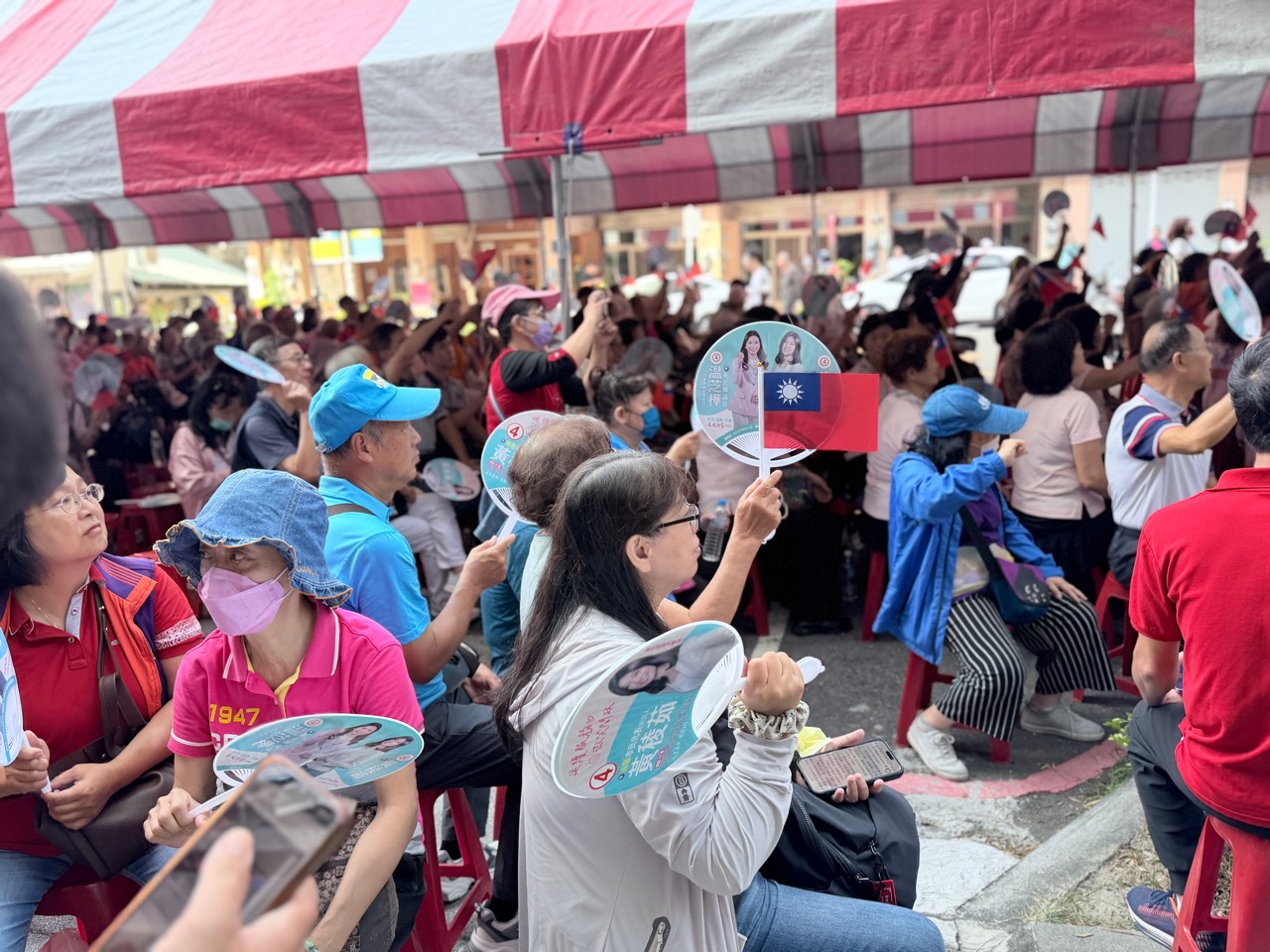
Can 18,000 AI agents tell us how Taichung voters will vote?
Human interviews, vote estimates and AI simulations coexist in Taichung election coverage. Establish how each result was produced before comparing leads.
READ ANALYSIS
Senge PollingSENGE POLLINGSystems thinking and evidence for understanding a changing society.

Human interviews, vote estimates and AI simulations coexist in Taichung election coverage. Establish how each result was produced before comparing leads.
READ ANALYSIS

Energy-permitting negotiations connect affordability demands to policy tradeoffs. Test cost allocation, construction timing and local participation separately.
READ ANALYSISEnergy-permitting negotiations connect affordability demands to policy tradeoffs. Test cost allocation, construction timing and local participation separately.
The post-midterm energy bargain tests whether household affordability demands can become enforceable infrastructure rules. This analysis compares five distinct Reuters reports with the November 7 BAAJA substitute-amendment announcement and selected provisions of its official change summary. The September House ratepayer measure, the broader permitting proposal and plans for future AI legislation represent different stages and instruments. Senge proposes three tests: who bears incremental and abandoned-project costs, when usable capacity arrives, and how communities can contest decisions. Negotiating progress does not establish household savings or completed legislation. The five reports overlap in events and originate from one news agency.


Share saying extremely important · Select an issue for context
KFF/AP Rural Voters Survey
Aug 12–24, 2026 · Rural registered voters, n=2,241. Multiple issues may be important; percentages are not additive.
Fieldwork: Sep 24–28, 2026. Probability-based AmeriSpeak panel, online and telephone interviews.
View original research and methodsFieldwork: Aug 12–24, 2026, online and telephone. Rural registered voters are not the same population as all U.S. adults.
Read the comparisonConnections suggest relationships to investigate. They do not establish direction, strength or causation.
News and original research provide evidence. Our commentary identifies analysis, hypotheses and unanswered questions.
Different questions and populations are not joined into a trend. Multiple news reports are not independent survey samples.
Commentary is published under Senge Research Team, with references, evidence dates and analytical scope for checking its reasoning.
Adjust the sample size to explore a theoretical maximum sampling margin under simple random sampling.
Educational illustration: p=50%, normal approximation, 1.96 × √(0.25/n). Excludes weighting, clustering, finite-population correction and nonresponse. This is not an error estimate for an actual survey.
An introduction to systems thinking
Returning to the conversation
In 2009, founder Dr. Chang encountered Peter Senge’s systems thinking through an inter-university distance-learning course associated with Dr. Song Kai, a professor at National Central University’s Graduate Institute of Information Management. The experience raised a question: when opinions are shaped by lived experience, public issues and interactions with others, how can we understand what lies behind a poll’s numbers?
This was the starting point for Senge Polling. We believe polling has value beyond reporting support or opposition at a particular moment. It can help us understand how opinions form and why they change. A single survey captures present voices; continued attention to relationships between groups, issues and time reveals the context of social change.
In 2026, Dr. Chang participated in an international forum in Hong Kong attended by Peter Senge. Returning to the conversation about systems thinking strengthened the founder’s conviction that this approach to complex problems has a place in public opinion research.
Our name reflects this perspective. We bring together systems thinking, intelligent technology and rigorous public opinion research. Starting with careful survey design, we aim to use analysis and technology to recognize change and examine what the numbers may leave unsaid. We hope our work helps people ask better questions, understand one another’s circumstances and make informed decisions.

Discuss the questions, populations and social context your research needs to understand.
Discuss a suitable research design, from defining questions to interpreting evidence.
Begin with the decision you face and discuss project scope and deliverables.
These are areas for research discussions. Actual scope, methods and availability must be confirmed for each project.